Material Physics and Bonding: Can You Get Veneers With Missing Teeth?
As a specialist in restorative materials contributing to The Gentle Care Hub, I evaluate the question "can you get veneers with missing teeth" through the lens of bond strength, surface area, and shear stress. A veneer is an adhesive restoration; its success depends entirely on the chemical and micromechanical bond to the enamel substrate. When a tooth is missing, that substrate is absent. Therefore, from a materials engineering standpoint, we must look at how we can manipulate ceramics and resins to span a gap, and why traditional veneer materials fail when subjected to the forces of an edentulous space.
The Failure of Tensile Strength in Ceramics
The primary material constraint in answering can you get veneers with missing teeth is the brittleness of feldspathic porcelain and lithium disilicate.
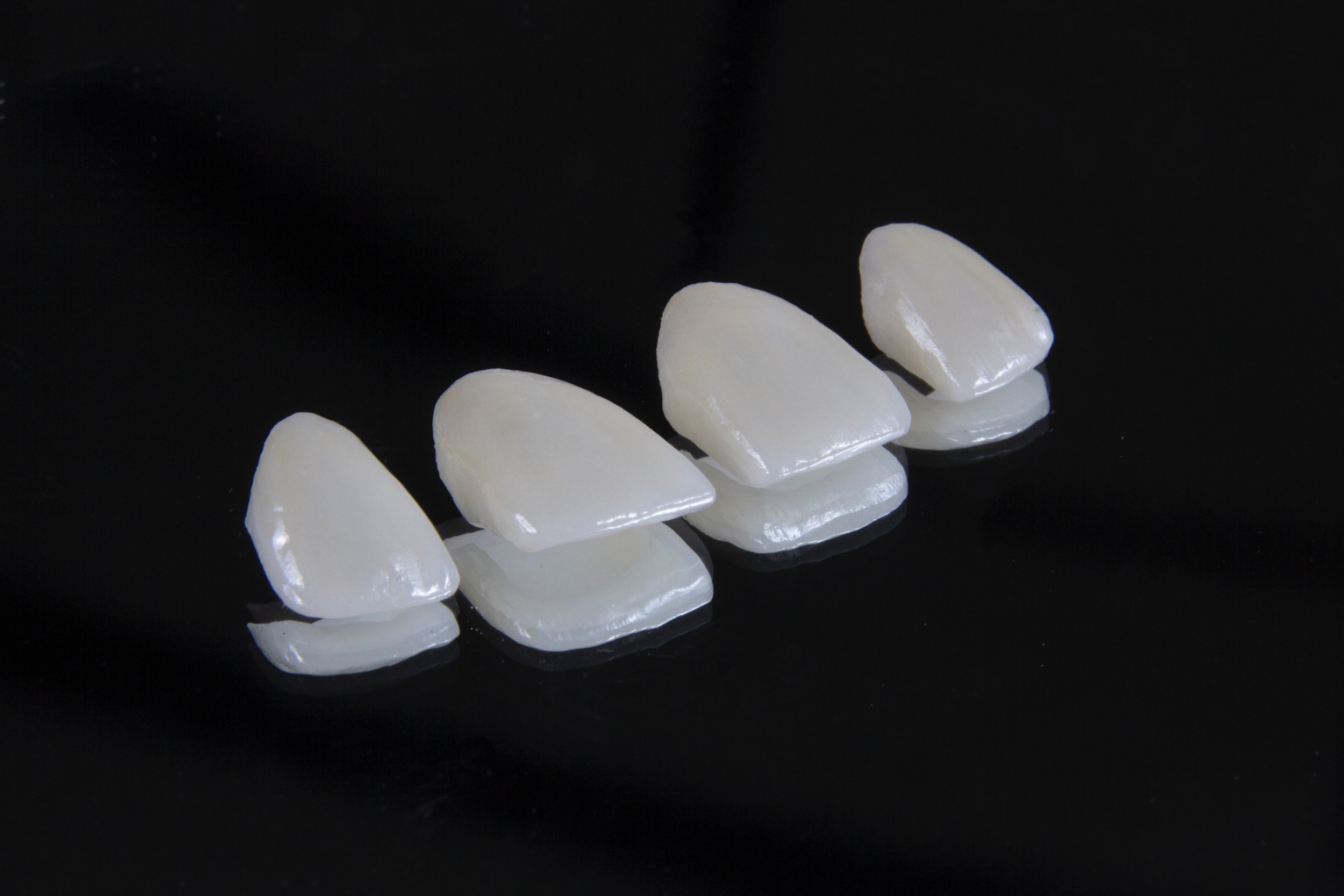
Cantilever Physics
Veneers are designed to resist compressive forces (biting down) when supported by a tooth. They have very poor tensile strength (being pulled apart). If you attempt to bond a veneer to one tooth and hang a "pontic" (fake tooth) off the side to fill a gap, you create a cantilever. When you bite on the fake tooth, it acts as a lever arm. This generates massive tensile stress at the connector site. Standard veneer materials will suffer catastrophic fracture almost immediately. They simply lack the flexural strength to support a load in a "flying" position without a substructure.
Resin-Bonded Bridges (The Maryland Bridge)
There is a specific material configuration where the answer to can you get veneers with missing teeth leans toward "yes," provided we change the design.
Zirconia Frameworks
The "Maryland Bridge" is essentially a winged veneer. Instead of bonding to the front (facial), it bonds to the back (lingual) of the neighbor teeth. Modern versions use Zirconia, a monoblock ceramic that is incredibly tough.
- The Material Difference: Unlike glass-based veneers, Zirconia can withstand the connector stress.
- The Bonding Challenge: Zirconia does not bond to teeth as easily as silica-based porcelain. We must use special phosphate-based primers (like 10-MDP) to get it to stick. Even then, these are considered "semi-permanent" because the bond surface area is limited compared to a full crown.
The Illusion of "Snap-On" Veneers
Some patients asking can you get veneers with missing teeth are referring to removable appliances, often made of crystallized acetyl resin or copolyester.
Flexible Resins
These are not true veneers but rather removable prosthetics that friction-grip over the remaining teeth.
- Material Properties: These resins are flexible (low elastic modulus). They can span a missing tooth gap because they flex rather than break.
- The Trade-off: Because they are soft and porous, they stain easily and do not offer the optical properties (translucency) of dental ceramic. They are a cosmetic disguise, not a functional restoration.
Technically, How do you get veneers if you have missing teeth? If we stick to the strict definition of a bonded ceramic laminate, the answer is governed by physics: no. The material cannot support itself in a void. However, by utilizing high-strength Zirconia frameworks or flexible removable resins, we can engineer solutions that mimic the appearance of veneers while respecting the mechanical limitations of the missing structure.
