Clinical Characteristics and Etiology of the Black Gum Line Around Crown in Restorative Dentistry
The Gentle Care Hub regularly examines clinical topics that patients notice but often misunderstand. One of the more visually concerning findings around dental restorations is the black gum line around crown, a dark shadow or line that can appear where a dental crown meets the gum tissue. While patients may interpret this as decay or failure of treatment, the explanation is often more complex and involves structural materials, gingival response, and biological adaptation.
Within the first months or years after crown placement, subtle changes can occur at the crown–gingiva interface. Understanding the underlying causes of a black gum line around crown requires examining restorative materials, tissue behavior, and optical characteristics of dental ceramics or metals. Secondary factors such as periodontal health and crown margin design can also contribute to the appearance.
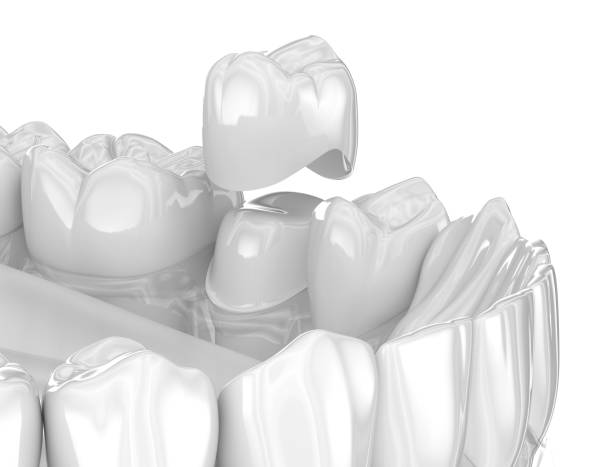
This clinical discussion analyzes the mechanisms responsible for the black gum line around crown, examining how restorative design and oral biology interact.
Material Interfaces and Their Role in Black Gum Line Around Crown Formation
The visual boundary between a dental crown and gingival tissue represents an interface where restorative materials meet living tissue. The optical and structural properties of crown materials significantly influence how this region appears.Historically, many crowns were fabricated using porcelain-fused-to-metal (PFM) technology. In these restorations, a metal coping forms the internal framework, while porcelain layers replicate tooth enamel.Although the porcelain exterior can mimic natural teeth effectively, the metal substructure may create a dark optical effect when light penetrates the ceramic layers. If gingival tissue recedes slightly, the metallic margin can become visible as a black gum line around crown.This phenomenon is not necessarily pathological; rather, it results from the interaction between crown design and light transmission.
Gingival Recession and Its Contribution to the Black Gum Line Around Crown
Soft tissue adaptation plays a central role in the appearance of dental restorations. The gingiva naturally remodels over time due to biological factors such as aging, inflammation, or mechanical forces.When the gingival margin migrates apically, even by a small amount, the crown margin becomes more exposed. In crowns with metal frameworks, this exposure often manifests visually as a black gum line around crown.Periodontal research cited by organizations such as the American Dental Association (ADA) indicates that mild gingival recession is common in adults and may occur regardless of crown placement. Factors contributing to recession include:
- aggressive tooth brushing
- periodontal disease
- anatomical variations in gingival thickness
- occlusal stress
The appearance of a dark line around a crown therefore may reflect natural gingival changes rather than restorative failure.
Optical Phenomena in Ceramic Restorations
Beyond structural exposure, optical properties can also create the illusion of a black gum line around crown. Dental ceramics vary in translucency, light diffusion, and opacity.When thin gingival tissue overlies a darker restorative core, the underlying shade may become visible through the soft tissue. This effect resembles the way blood vessels sometimes show through skin.Even modern all-ceramic crowns may occasionally produce a slight shadow effect depending on lighting conditions and tissue thickness.
Crown Margin Placement and Its Aesthetic Consequences
Another determinant of the black gum line around crown is the location of the crown margin relative to the gingiva.Dentists typically choose one of three margin positions:
- supragingival (above the gum line)
- equigingival (level with the gum)
- subgingival (slightly below the gum line)
Each approach balances aesthetic goals with biological safety. Subgingival margins can hide crown edges but must be placed carefully to avoid irritation of periodontal tissues.If gingival tissues recede over time, margins that were originally hidden may become visible.
Periodontal Inflammation and Pigmentation Changes
Inflammation around dental restorations can alter the color and contour of gingival tissues. When plaque accumulates near crown margins, the gingiva may become darker or slightly swollen.Although this discoloration may resemble a black gum line around crown, the underlying cause differs from metallic exposure. Instead, the change arises from vascular and inflammatory processes in the tissue.Professional evaluation is required to distinguish between these scenarios.
Influence of Crown Materials in Modern Restorative Dentistry
Advances in dental materials have significantly reduced the likelihood of visible dark margins. Contemporary crowns often use zirconia or lithium disilicate ceramics, which do not contain metallic frameworks.These materials allow light to pass through in a manner similar to natural enamel, reducing shadow effects near the gum line.Nevertheless, a black gum line around crown may still appear if gingival recession exposes internal components or if surrounding tissues become pigmented.
Diagnostic Considerations
Clinical evaluation of a black gum line around crown typically involves visual examination, periodontal probing, and radiographic assessment. Dentists may assess:
- margin integrity
- gingival health
- crown adaptation
- underlying tooth structure
The goal is to determine whether the appearance is purely cosmetic or associated with structural concerns such as crown margin leakage.
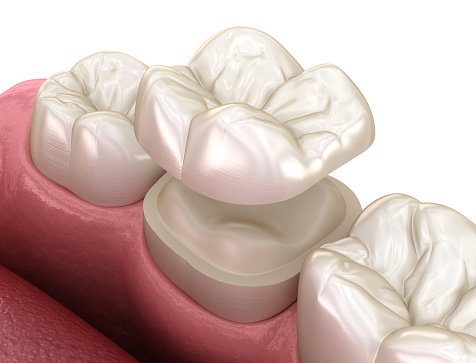
The appearance of a black gum line around crown is often multifactorial. Material properties, gingival tissue behavior, crown margin placement, and optical effects all influence how the crown–gum interface appears.In many cases, the dark line represents a cosmetic phenomenon rather than a clinical complication. However, accurate diagnosis requires professional assessment to rule out issues related to crown fit or periodontal health.
