Material Science and Engineering: The Composition of Porcelain Fused to Metal Crowns
As a restorative materials specialist at The Gentle Care Hub, I evaluate porcelain fused to metal crowns not just as a dental procedure, but as a complex engineering feat involving the fusion of two disparate materials. The clinical success of these restorations is heavily dependent on the specific alloy selected and the technical layering of the ceramic. While the concept is decades old, the materials science behind it has evolved. Understanding the specific properties of the metal substructure and the overlying porcelain is essential for predicting the performance, wear characteristics, and esthetic potential of the final restoration.
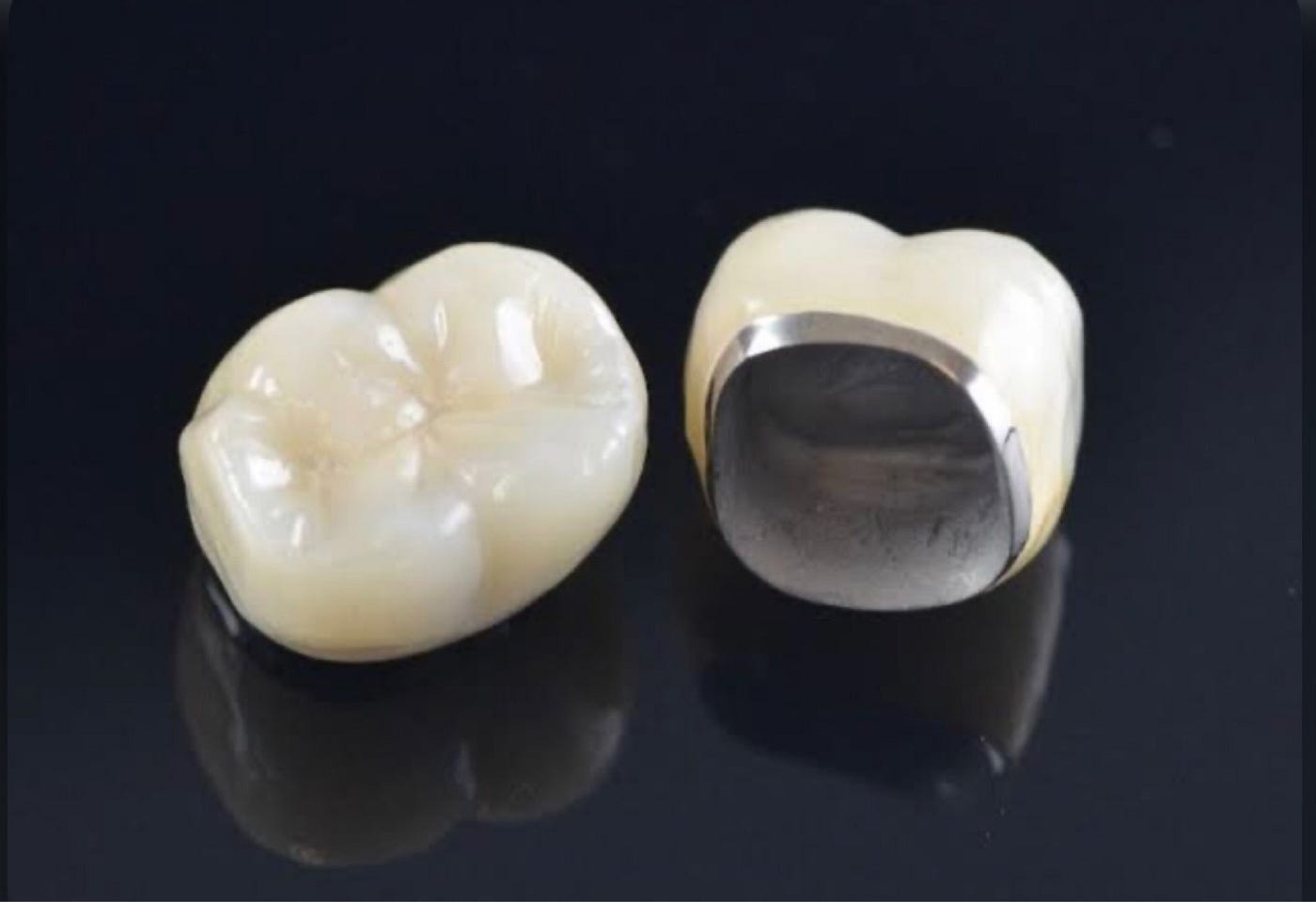
Alloy Selection: The Foundation
The metal "coping" is the heart of porcelain fused to metal crowns. We classify these alloys based on their noble metal content (Gold, Platinum, Palladium).
High Noble Alloys
These contain at least 60% noble metal (with at least 40% being gold). From a materials standpoint, these are the gold standard. They are easier to cast accurately, have a coefficient of thermal expansion that matches porcelain well, and are naturally resistant to corrosion. The yellow color of the gold also provides a warmer tone for the overlaying porcelain, making the final tooth look more vital and natural.
Base Metal Alloys
These contain less than 25% noble metal and are usually composed of Nickel-Chromium or Cobalt-Chromium. While they are stronger and stiffer—making them excellent for long-span bridges—they are harder to cast and harder to adjust. The dark gray oxide layer they produce is difficult to mask with porcelain, often leading to porcelain fused to metal crowns that look dull or grayish in value. Furthermore, the high hardness of these alloys can be abrasive to opposing natural teeth if the porcelain wears away.
The Opaque Layer and Esthetics
The greatest challenge in fabricating porcelain fused to metal crowns is masking the metal core.
Blocking the Light
Before the tooth-colored porcelain is applied, a layer of "opaque" porcelain must be fired onto the metal. This layer is critical for chemical bonding, but it creates an optical barrier. Light hits the crown and bounces off the opaque layer rather than traveling through the tooth. This creates a high "value" (brightness) but low translucency. To make the crown look natural, the ceramist must stack layers of translucent body and incisal porcelain over the opaque. If the dentist does not reduce the tooth enough (under-preparation), the technician has no room for these translucent layers, resulting in a tooth that looks flat, fake, and "headlight white."
Porcelain Hardness and Opposing Wear
The feldspathic porcelain used in porcelain fused to metal crowns is significantly harder than natural tooth enamel.
Iatrogenic Wear
Enamel has a hardness of roughly 350-400 Knoop. Conventional feldspathic porcelain can be 460 Knoop or higher. If the surface of the crown is rough or unpolished, it acts like sandpaper against the opposing natural tooth. Over years of chewing, the porcelain fused to metal crowns can grind down the opposing dentition, causing significant loss of tooth structure. Modern low-fusing porcelains are designed to be kinder to opposing teeth, but the risk remains. This is why a final polish of the crown is technically critical; a glazed and polished surface causes significantly less wear than a rough one.
The Metal Collar Design
Technique sensitivity in porcelain fused to metal crowns extends to the design of the margin.
The Porcelain Butt Margin
To avoid the unsightly "metal ring" at the gum line, we can cut back the metal coping at the facial margin and replace it with a shoulder of solid porcelain. This is called a "porcelain butt margin." It allows light to penetrate the root area, significantly improving esthetics. However, it is technically demanding. The fit of the porcelain to the tooth is not as precise as cast metal, increasing the reliance on the resin cement to seal the gap. It is a trade-off between the superior seal of metal and the superior look of ceramic.
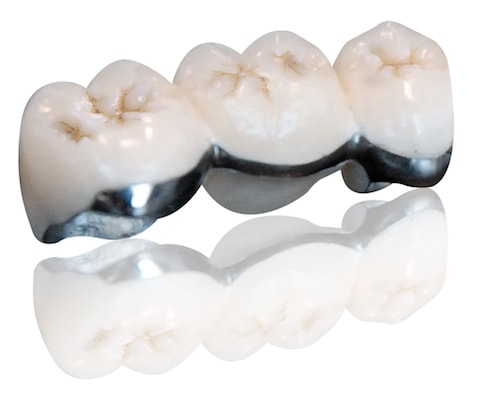
When explaining exactly what is a porcelain fused to metal crown, the material science behind these restorations involves a careful balancing act of metallurgy and ceramic engineering. The choice of alloy dictates the biological response and fit, while the management of the opaque layer dictates the esthetic outcome. By understanding these variables, we can select the appropriate materials to maximize both the longevity and the appearance of the restoration.
