Piezoelectric vs. Magnetostrictive Systems: A Technical Audit of Ultrasonic Teeth Cleaning
In the realm of dental instrumentation engineering, the term ultrasonic teeth cleaning encompasses two distinct technological platforms: Magnetostrictive and Piezoelectric systems. While both achieve the clinical endpoint of calculus removal via high-frequency tip oscillation, they employ fundamentally different mechanisms of energy transduction. This technical breakdown by The Gentle Care Hub evaluates the operational physics, nodal vibration patterns, and heat generation characteristics of both systems, providing a structural analysis of the hardware used in periodontal debridement.
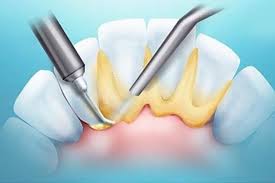
Magnetostrictive Technology (The Stack System)
To truly answer the question of what is an ultrasonic teeth cleaner from an engineering standpoint, one must examine its core technologies. The traditional "Cavitron" style unit operates on the principle of magnetostriction.
Ferromagnetic Expansion
The handpiece contains a "stack" of nickel-iron alloy strips (metal laminates) or a ferrite rod. When an alternating electromagnetic field is applied via a coil in the handpiece, the magnetic domains within the stack align, causing the metal to expand and contract. This physical deformation generates the vibration.
- Frequency: Typically 25 kHz or 30 kHz (25,000 or 30,000 cycles per second).
- Tip Motion: The vibration creates an elliptical or orbital stroke pattern. This means all sides of the tip (front, back, and lateral edges) are active.
- Heat Generation: The electromagnetic conversion is inefficient, generating significant heat in the handpiece itself, necessitating water cooling for both the tip and the handle.
Piezoelectric Technology (The Crystal System)
The "Piezo" scaler represents a different approach to ultrasonic teeth cleaning, utilizing the piezoelectric effect found in ceramics.
Dimensional Change in Crystals
The handpiece contains ceramic crystals (usually quartz or lead zirconate titanate). When high-voltage electrical current is applied to the crystals, they physically deform (expand/contract) without the use of a magnetic field.
- Frequency: Typically higher, ranging from 28 kHz to 45 kHz.
- Tip Motion: The vibration creates a linear (back and forth) stroke pattern. This is a critical distinction. Only the lateral sides of the tip are active; the face and back are inactive.
- Heat Generation: This transduction is highly efficient, producing very little heat in the handpiece. Water is required primarily to cool the friction at the tip-tooth interface, not the engine itself.
Operational Mechanics and Load Resistance
How the units respond to resistance defines their utility in ultrasonic teeth cleaning.
Load Sensing
Piezoelectric units often feature "load sensing" technology. As the tip encounters tenacious calculus (resistance), the unit increases power to maintain the frequency. This provides a "cutting" sensation similar to a blade. Magnetostrictive units can sometimes dampen (stall) under heavy load if the stack cannot overcome the resistance, requiring a different feather-light technique from the operator. The linear motion of the Piezo requires more precise angulation (like a hand scaler), whereas the elliptical motion of the Magnetostrictive unit allows for more forgiving adaptation to the tooth curvature.
Aerosolization and Fluid Dynamics
Both systems generate aerosols, but the character differs.
Atomization
The ultrasonic teeth cleaning process relies on atomization of the coolant. Magnetostrictive units, with their lower frequency and larger amplitude orbital motion, tend to create a larger, more chaotic aerosol cloud. Piezo units, with their higher frequency and linear precision, can create a finer mist. From an HVAC and infection control engineering standpoint, the volume of aerosol is a function of water flow rate and tip amplitude, both of which are variable user settings.
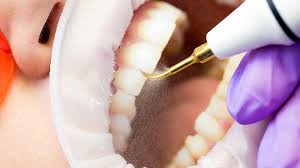
Technically, both systems perform ultrasonic teeth cleaning effectively, but they require different operator mechanics. The Magnetostrictive system offers multi-surface tip activity suitable for general debridement, while the Piezoelectric system offers linear precision and higher power efficiency for tenacious deposits. Understanding these engineering differences explains the variation in tactile feedback and clinical technique required for each.
