Instrumentation Mechanics: Why Scaling Teeth at Home Fails Engineering Standards
From an engineering and mechanical standpoint, the removal of calculus is a procedure of vectors, angulation, and material hardness. The specialized instruments used in periodontics—scalers and curettes—are precision-milled tools designed to interact with specific topographical features of the tooth root. The consumer-grade kits marketed for scaling teeth at home lack the metallurgical quality and design geometry required for safe efficacy. This analysis by The Gentle Care Hub explores the physics of instrumentation, the Mohs hardness differential between enamel and steel, and why the mechanics of self-scaling inevitably lead to structural damage.
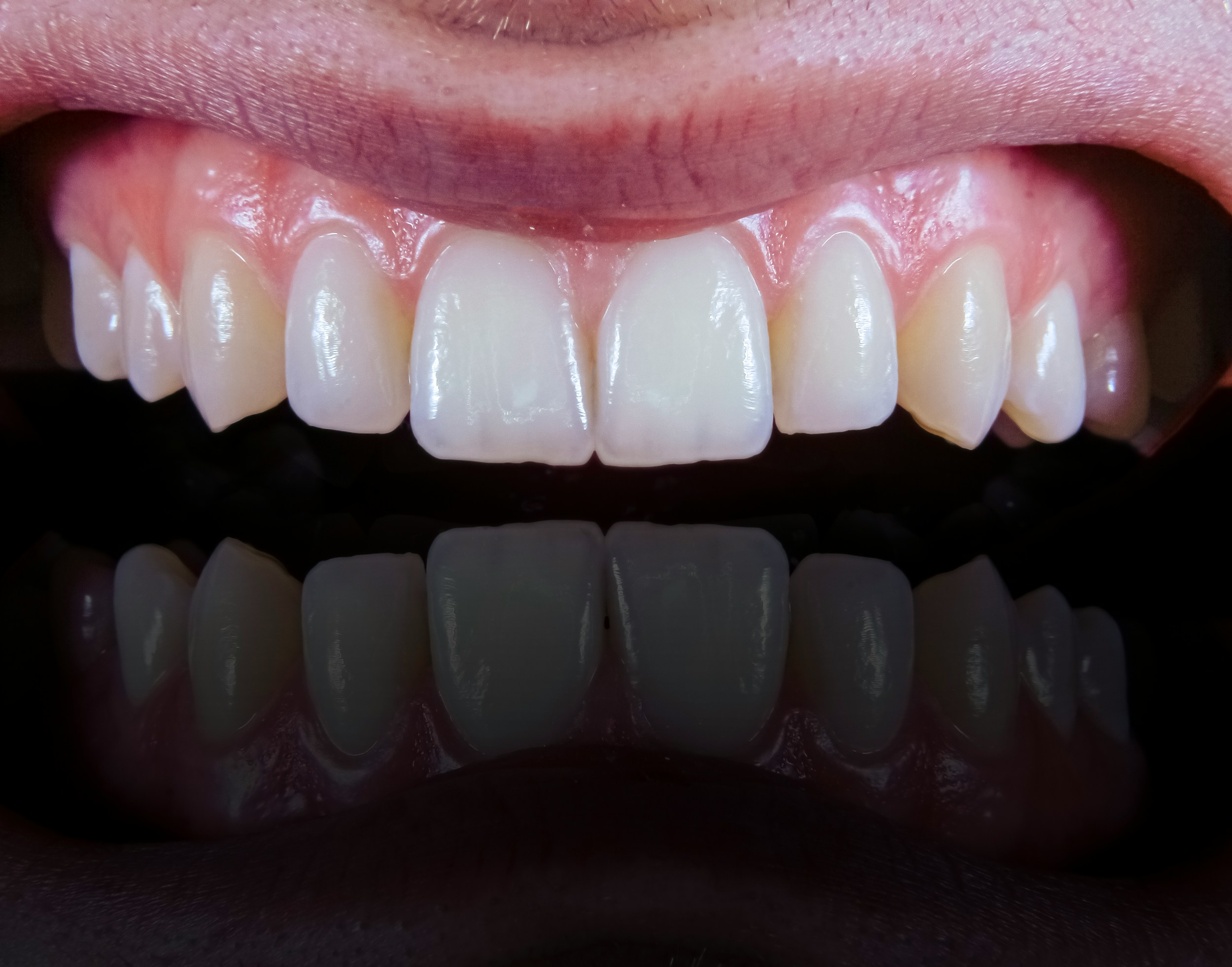
Tool Geometry and Blade Angulation
A professional scaler is not a simple pick; it is a blade with a specific cutting edge.
The 70-Degree Rule
For a scaler to effectively fracture a calculus deposit without gouging the tooth, the face of the blade must meet the tooth surface at an angle between 70 and 80 degrees.If the angle is greater than 90 degrees, the non-cutting edge traumatizes the adjacent soft tissue. If the angle is less than 45 degrees, the blade "burnishes" the calculus—smoothing it over rather than removing it. Achieving this precise angulation requires an external fulcrum and direct line of sight. When attempting scaling teeth at home, the user cannot physically position their hand to achieve this 70-degree vector, particularly on the lingual surfaces. The result is inevitably burnished calculus (which is harder to remove later) or soft tissue laceration.
Metallurgy and Mohs Hardness Scale
The interaction between the instrument and the substrate is governed by material hardness.
Stainless Steel vs. Hydroxyapatite
Dental enamel (hydroxyapatite) has a Mohs hardness of approximately 5. Carbon steel or stainless steel scalers are also in the 5-6 range, but they can be work-hardened to be sharper and denser. When a professional uses a scaler, they apply "lateral pressure" selectively against the deposit, not the tooth. In scaling teeth at home, untrained operators apply uncontrolled force against the tooth structure. Because the hardness values are similar, the steel can easily scribe, scratch, or gouge the enamel and the much softer cementum (root surface) below. These iatrogenic gouges create mechanical retention features that accelerate future bacterial adhesion.
Ultrasonic Physics vs. Manual Force
Modern dentistry relies heavily on ultrasonic magnetostrictive or piezoelectric scalers.
Cavitation and Microstreaming
Professional ultrasonic units operate at 25,000 to 50,000 cycles per second. They remove deposits through vibration and cavitation (exploding water bubbles), not just scraping. This allows for deposit removal with minimal pressure. In contrast, scaling teeth at home relies entirely on manual shear force. To break the bond of mature calculus (which can be as hard as concrete), significant force is required. Without the vibratory assistance of ultrasonics, the manual force needed often exceeds the operator's control, leading to instrument slippage and impact trauma to the periodontium.
Tip Design and Access Limitations
Professional instruments come in area-specific designs (e.g., Gracey curettes) with complex shank bends to access the curvature of molar roots.
The Limitations of the "One-Shape" Tool
DIY kits typically provide a generic "sickle" scaler. This shape is strictly designed for supragingival use on front teeth. It has a triangular cross-section with a sharp back. If a user attempts scaling teeth at home and inserts this triangular tip below the gumline, the sharp back of the instrument acts like a blade against the inner gum tissue, causing immediate laceration. The geometry of generic tools is physically incompatible with the complex anatomy of the root surface, making safe subgingival debridement a geometric impossibility.
The mechanics of debridement are unforgiving. The required angulation, force modulation, and instrument adaptation are skills honed over years. When patients ask, "Can teeth scaling be done at home?", they must understand that attempting to bypass these mechanical requirements results in a mismatch of forces that damages the biological substrate. From a technical perspective, the risk of structural damage to the dentition is a statistical certainty.
