Engineering Constraints on How Old Do You Have to Be to Get Braces
From a biomechanical engineering perspective, the orthodontic translation of dentition is a study in vector forces, moments, and the biological reaction of the periodontal ligament. The question of how old do you have to be to get braces is essentially a query regarding the structural integrity of the anchorage units (molars) and the tensile strength of the bonding interface. This technical analysis by The Gentle Care Hub explores the mechanical limitations imposed by the mixed dentition and the varying modulus of elasticity in primary versus permanent enamel.
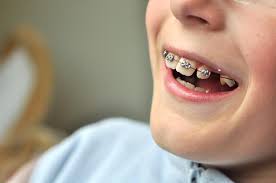
Bonding Physics: Primary vs. Permanent Enamel
The attachment of a bracket to a tooth relies on the micromechanical interlocking of resin into acid-etched enamel prisms.
Shear Bond Strength (SBS) Variables
Primary teeth (deciduous dentition) possess an aprismatic enamel surface layer and a lower mineral content compared to permanent teeth. When etching primary enamel with 37% phosphoric acid, the resulting etch pattern is often Type III (irregular) rather than the ideal Type I (honeycomb) pattern seen in permanent teeth. This results in significantly lower Shear Bond Strength (SBS). In a dynamic environment like the oral cavity, brackets bonded to primary teeth have a higher failure rate under masticatory load. Therefore, from a materials science standpoint, how old do you have to be to get braces is determined by the availability of sufficient permanent enamel surface area to support the appliance without recurrent bond failure.
Anchorage Value and Root Surface Area
Newton’s Third Law dictates that for every action, there is an equal and opposite reaction. To retract a canine, the molar (anchorage unit) must withstand the reciprocal force.
The Root Resorption Variable
In the mixed dentition (ages 6-12), the roots of the permanent first molars may be fully formed, but the premolars are often unerupted or erupting with incomplete root formation (open apices). Primary molars, which serve as temporary anchorage, have roots that are undergoing physiological resorption.
- Instability: Using a primary molar with resorbing roots as an anchor is mechanically unsound. The tooth becomes mobile under load, resulting in a loss of anchorage (the anchor moves forward instead of the target tooth moving back).
- Engineering Constraint: Comprehensive mechanics require stable posterior anchorage. This technical limitation dictates that the optimal answer to what age do kids get braces coincides with the eruption and root stabilization of the second permanent molars (typically age 12), creating a "tripod" of stability with the first molars.
Rapid Maxillary Expansion (RME) Mechanics
Orthopedic expansion relies on the patency of the mid-palatal suture.
Sutural Interdigitation
The maxilla is formed by two halves joined at the mid-palatal suture. In prepubertal patients, this suture is smooth and broad. As the patient matures, the suture becomes increasingly interdigitated (like a zipper) and eventually fuses.
- Force Application: An RME appliance applies lateral force to separate the suture. In patients <15 years, this results in skeletal expansion (true widening).
- Failure Mode: In older adolescents (>16-18 years), the increased interdigitation creates high resistance. Applying force often results in "dental tipping" (teeth flaring out) rather than skeletal movement, or potentially periodontal fenestration. Thus, for transverse skeletal corrections, how old do you have to be to get braces is capped by the fusion ossification timeline of the craniofacial sutures.
Biomechanics of Vertical Eruption
Leveling the Curve of Spee (flattening the bite) requires the extrusion of premolars or intrusion of incisors.
Vertical Dimension Control
In a growing child, the vertical dimension of the face is increasing. Orthodontists utilize this vertical growth to "erupt" teeth into a flat plane. In a non-growing adult, leveling a deep bite is mechanically more difficult because the vertical skeletal vector is static. This necessitates different force systems (e.g., Temporary Anchorage Devices or TADs) to achieve intrusion. The engineering efficiency of bite leveling is highest during the active vertical growth spurt, reinforcing the adolescent timeframe as the optimal window for biomechanical intervention.

The determination of how old do you have to be to get braces is fundamentally a calculation of structural solvency. Can the enamel hold the bracket? Is the root surface area sufficient for anchorage? Is the suture patent for expansion? The engineering data supports a treatment window that aligns with specific developmental milestones—typically the late mixed dentition or early permanent dentition—to maximize mechanical efficiency and minimize appliance failure.
