A Comparative Analysis of the Composite Tooth Filling
This comprehensive installment from the The Gentle Care Hub research synthesis division investigates the vast, evolving landscape of academic literature surrounding posterior restorative materials. The paradigm shift from conventional silver amalgam alloys to aesthetic, adhesive polymer systems represents one of the most heavily scrutinized transitions in modern clinical dentistry. To objectively evaluate the clinical validity and long-term efficacy of a composite tooth filling, it is necessary to conduct a meticulous review of randomized controlled trials, longitudinal cohort studies, and extensive meta-analyses. This academic review aggregates and interprets contemporary data to provide an evidence-based comparison of survivability, microleakage prevalence, and the highly debated toxicological profiles of these competing restorative modalities.
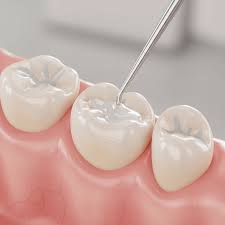
The historical gold standard for restoring posterior cavitated lesions was dental amalgam, prized for its exceptional compressive strength, ease of placement in moisture-contaminated environments, and its unique ability to self-seal over time as corrosion products filled the marginal gap. However, the literature indicates a rapid decline in amalgam utilization, driven heavily by patient demand for aesthetic alternatives, the desire for minimally invasive preparation designs, and environmental concerns regarding mercury pollution. The ascension of the composite fillings was initially met with intense academic skepticism regarding its capability to withstand the hostile posterior occlusal environment, prompting decades of rigorous comparative research.
Systematic Review of Microleakage in a Composite Tooth Filling
A primary focus within the restorative literature is the evaluation of marginal integrity and the prevention of bacterial microleakage, which is universally recognized as the primary precursor to secondary caries and eventual restorative failure.Early generation comparative studies frequently demonstrated that resin restorations exhibited statistically significantly higher rates of microleakage compared to amalgam controls. This discrepancy was heavily attributed to the unabated effects of polymerization shrinkage stress disrupting the delicate dentinal adhesive interface. However, a review of recent literature published over the last decade, specifically assessing contemporary nano-filled composites paired with advanced universal adhesive systems, reveals a profound shift in the data. Recent in vitro dye penetration studies and in vivo clinical evaluations indicate that when modern adhesive protocols are meticulously executed under strict rubber dam isolation, the marginal seal of a composite tooth filling is statistically non-inferior to that of amalgam. The critical caveat emphasized throughout the literature, however, remains the extreme technique sensitivity of the resin procedure; any deviation in moisture control immediately nullifies the adhesive seal, a vulnerability not present with traditional amalgam.
Longitudinal Cohort Studies on Biocompatibility
The academic discourse must also address the extensive research surrounding the biocompatibility and potential systemic toxicity of restorative materials. The literature is saturated with debates concerning the release of elemental mercury vapor from amalgam restorations versus the elution of unreacted monomers from resin matrices.Extensive Cochrane reviews and reports from major global health organizations have repeatedly failed to find a statistically significant correlation between the presence of dental amalgam and systemic neurological or renal pathologies in the general population. Despite this lack of causal evidence, the Minamata Convention on Mercury has successfully driven a global reduction in its use. Conversely, research scrutinizing the composite tooth filling focuses on the potential release of Bisphenol-A (BPA) and its derivatives, such as Bis-GMA and TEGDMA, due to incomplete polymerization or enzymatic degradation in the oral cavity. While in vitro studies demonstrate that these eluted monomers can exhibit mild cytotoxic and estrogenic effects on human cells in isolated environments, comprehensive in vivo systemic analyses conclude that the actual concentration of BPA released into the saliva is infinitesimally small. The consensus of current meta-analyses dictates that the systemic exposure to BPA from dental resins falls orders of magnitude below the established tolerable daily intake levels, rendering the materials biologically safe for broad clinical application.
Statistical Efficacy of a Composite Tooth Filling in Posterior Quadrants
The ultimate metric for comparing these modalities is the long-term clinical survival rate, typically assessed via retrospective cohort analyses spanning ten to fifteen years.
Historical longitudinal data consistently favored amalgam, demonstrating lower annual failure rates and a lower incidence of secondary caries, particularly in large, multi-surface posterior restorations. However, contemporary statistical data presents a narrowing gap. Recent large-scale university studies indicate that the annual failure rate of a modern composite tooth filling placed by an experienced clinician is approaching parity with amalgam. The literature suggests that the shifting success rates are largely attributable to the evolution of minimally invasive dentistry. Because resin restorations rely on chemical adhesion rather than the macroscopic mechanical retention required by amalgam, clinicians can preserve significantly more healthy tooth structure during cavity preparation. The academic consensus asserts that while amalgam may still hold a slight statistical advantage in massive, high-load posterior replacements where isolation is impossible, the structural preservation afforded by adhesive resin technology ultimately reduces the risk of catastrophic tooth fracture, validating the widespread adoption of composite materials as the modern standard of care.
Research Synthesis
The synthesis of current peer-reviewed research confirms that the transition to aesthetic restorative materials is supported by robust clinical data. While demanding meticulous operational technique and strict moisture control, the modern composite tooth filling provides exceptional marginal integrity and wear resistance. The literature validates that when executed appropriately, the adhesive preservation of the tooth structure fundamentally outweighs the historical longevity advantages of traditional metallic alloys.
