Particle Size and Masticatory Efficiency: Engineering the Best Foods After Tooth Extraction
From a biomechanical standpoint, as evaluated at The Gentle Care Hub, the oral environment following exodontia presents a unique challenge: the necessity of nutrient intake versus the requirement for mechanical quiescence at the surgical locus. The selection of the best foods after tooth extraction is essentially an engineering problem involving particle size distribution, compressive strength of the food bolus, and the vector of masticatory forces. The goal is to minimize the "strain" on the coagulum (blood clot) and prevent the mechanical impaction of debris into the alveolar defect.
Analysis of Particle Incursion
The socket left after extraction is a cavity with a specific volume and geometry.
The Geometric Risk of Grains
Foods such as rice, couscous, quinoa, and sesame seeds pose a significant mechanical hazard. Their average particle diameter (1-3mm) is often smaller than the orifice of the extraction socket. This allows for "particle incursion," where the food debris enters the wound. Once lodged, these particles are difficult to remove via hydraulic rinsing without disturbing the clot. Consequently, the best foods after tooth extraction are those with a homogeneous consistency or particle sizes significantly larger than the socket opening, preventing accidental ingress. Homogenized soups and purees eliminate this variable entirely.
Rheological Properties of the Bolus
We must evaluate the texture profile analysis (TPA) of potential foods.
Compressive Force Thresholds
The act of chewing generates compressive forces ranging from 70 to 150 Newtons. Transmitting this force through a hard bolus (like a nut or raw carrot) creates lateral vectors that can distend the gingival margins or traumatize the adjacent alveolus.
- Low Compressive Strength Foods: Scrambled eggs, mashed squash, and silken tofu require negligible force (<5 N) to deform. They yield under the pressure of the tongue against the hard palate, bypassing the need for dental occlusion.
- High Compressive Strength Foods: Steaks and raw vegetables require cyclical loading and shearing. This movement increases the risk of "slip," where the bolus slides uncontrollably into the surgical site. Therefore, technically, the safest choices for what to eat after dental extractions are those classified as semi-solids or soft-solids with low cohesiveness.
Temperature Dynamics and Hemostasis
Thermal energy transfer affects the vascular bed of the wound.
Thermodynamic Vasodilation
The introduction of high-temperature fluids creates a hyperemic response. This vasodilation increases hydrostatic pressure within the capillaries, potentially dislodging the fragile fibrin plug. Conversely, cryotherapy (cold foods) increases the viscosity of the blood and promotes vasoconstriction. From a technical management perspective, foods with a temperature between 0°C and 4°C (e.g., gelato, chilled shakes) are optimal in the first 24 hours to mechanically assist in hemostasis and edema control.
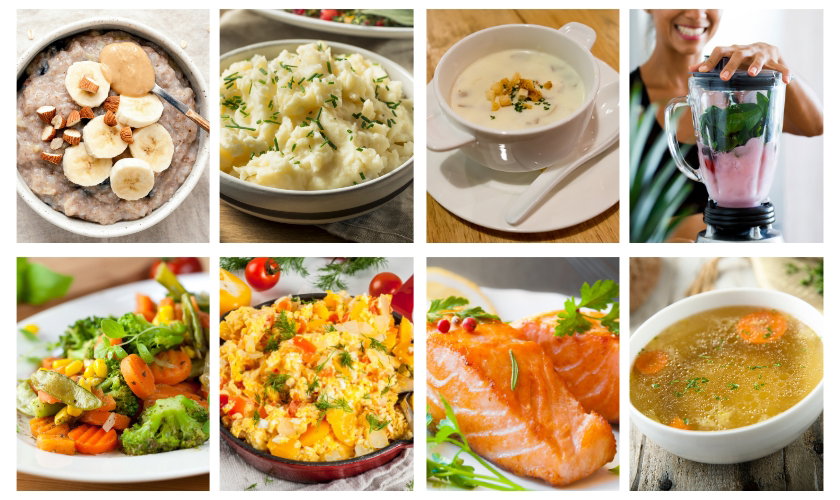
The technical definition of the best foods after tooth extraction relies on minimizing particle entrapment risks and reducing masticatory load. By selecting foods with high homogeneity, low compressive strength, and appropriate thermal properties, we engineer an environment that protects the surgical integrity of the alveolus during the critical initial healing phase.
